
Exploring the History of Sud Aviation SA 313 Alouette II
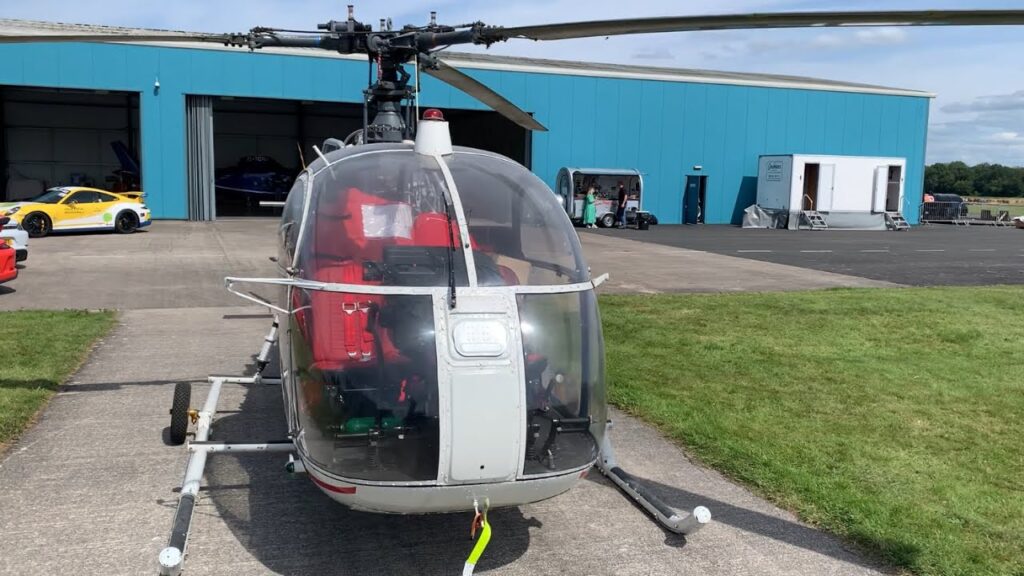
The Sud Aviation SA 313 Alouette II is a single-engine, light utility helicopter developed by French manufacturer Sud Aviation. Its history dates back to the mid-1950s when it was first introduced as an upgrade to the Alouette I. The Alouette II was a significant improvement in terms of performance, power, and capacity. Its design was innovative for its time, featuring a fully articulated, three-blade main rotor and a turbine engine, which was quite advanced for the era.
On June 12, 1955, the Alouette II made its first flight, and two years later, it was put into service. The helicopter was well-received in the market due to its high performance and reliability. It was extensively used in various roles, including light transport, observation, and even medical evacuation. One of its most notable achievements was on June 6, 1956, when a modified version of the Alouette II set an altitude record by reaching 8,209 meters, demonstrating the aircrafts impressive capabilities.
Global Influence and Use
The Sud Aviation SA 313 Alouette II had a significant impact on the global aviation industry. Its superior design and performance led to its widespread use in many countries around the world. The helicopter was used extensively by the French Army and was also exported to other countries, including Germany, Sweden, and India. The Alouette II was even licensed for production in the United States by the Helicopter Corporation of America.
Throughout its operational history, the Alouette II has proven its reliability and versatility in various situations, including search and rescue missions, agricultural applications, and even Antarctic exploration. Despite being replaced by newer models, the Sud Aviation SA 313 Alouette II remains an important part of aviation history, demonstrating the potential of turbine-powered helicopters.
The Technical Specifications of Sud Aviation SA 313 Alouette II
The Sud Aviation SA 313 Alouette II is a light utility helicopter originally manufactured by Sud Aviation (now Airbus Helicopters). It was the first production helicopter to be powered by a gas turbine engine. This helicopter has been widely used for various purposes, including military operations, civilian transport, and rescue missions.
Powerplant and Performance
The Alouette II is powered by a single Turbomeca Artouste IIIB turboshaft engine, capable of delivering 870 horsepower. This powerplant allows the helicopter to reach a maximum speed of 185 km/h (115 mph) and a service ceiling of 3,200 m (10,500 ft). Its range is estimated at 540 km (335 miles), making it suitable for medium-distance transport.
Design and Capacity
The design of the Sud Aviation SA 313 Alouette II is characterized by its three-blade main rotor and a two-blade tail rotor. The helicopter is equipped with a spacious cabin, capable of accommodating four passengers in addition to the pilot. The Alouette II also features skid landing gear, which contributes to its versatility, allowing it to land on a variety of terrains.
Avionics and Equipment
The Alouette II is equipped with advanced avionics for its time, including a VHF omnidirectional radio and a range navigation (VOR) system. For rescue operations, the helicopter can be fitted with a hoist with a capacity of up to 204 kg (450 lbs). Its flexible design allows for other specialized equipment to be installed depending on the mission requirements.
Significant Roles and Missions of Sud Aviation SA 313 Alouette II
The Sud Aviation SA 313 Alouette II is a light utility helicopter that has played a crucial role in various operations worldwide. Its impressive performance and versatility have made it a key player in both military and civilian missions.
Military Operations
In the military realm, the Alouette II has been employed in a variety of missions, including reconnaissance, transport, and search and rescue operations. Its ability to operate in challenging terrains and weather conditions has made it a reliable asset for armed forces. Notably, the Alouette II was extensively used during the Algerian War, providing valuable support to French forces. It was also the first helicopter to perform a high-altitude rescue operation, further proving its utility in challenging scenarios.
Civilian Missions
On the civilian front, the Sud Aviation SA 313 Alouette II has been instrumental in various humanitarian and emergency response missions. Its capability to land in remote and inaccessible areas has made it an indispensable tool for disaster relief operations. Furthermore, its use in medical evacuations has saved countless lives over the years. Additionally, the Alouette II has been utilized in several industries for tasks such as aerial surveying, power line inspections, and crop dusting.
With its robust performance and diverse utility, the Sud Aviation SA 313 Alouette II has made a significant impact in both military and civilian operations worldwide. Its role in such varied missions underlines its adaptability and efficiency, making it a truly remarkable aircraft.
Comparing Sud Aviation SA 313 Alouette II with Other Helicopters
The Sud Aviation SA 313 Alouette II is a notable helicopter model, renowned for its superior flight characteristics and versatility. When compared to other helicopters, there are several aspects that set the Alouette II apart.
Performance and Versatility
The Alouette II boasts a powerful Turbomeca Artouste IIB turboshaft engine, allowing it to reach a maximum speed of 185 km/h and a range of 540 km. This outperforms several other helicopters in its class, such as the Bell 206 JetRanger, which has a top speed of 150 km/h and a range of 430 km. Furthermore, the Alouette IIs capacity to carry up to 5 passengers or a load of 840 kg gives it a significant edge in versatility over many other models.
Design and Technology
The design and technology of the Alouette II also differentiate it from other helicopters. It was one of the first helicopters to use a gas turbine instead of a piston engine, a feature that has since become standard in the industry. This technological leap gave the Alouette II increased reliability and performance. In terms of design, the Alouette IIs spacious cabin and large windows provide exceptional visibility for both passengers and pilots, a feature that is not as prominent in other helicopters such as the Hughes 269.
Historical Significance
Finally, the Alouette II holds a unique place in aviation history. It was the first production helicopter to be powered by a gas turbine engine, and it set several altitude records in the 1950s and 1960s. Additionally, it was used in a variety of roles, from search and rescue to military transport, demonstrating its versatility and adaptability. These historical achievements further distinguish the Alouette II from other helicopters.
The Legacy and Impact of Sud Aviation SA 313 Alouette II on Aviation History
The Sud Aviation SA 313 Alouette II left an indelible mark on the annals of aviation history, carving a legacy that continues to influence modern aviation. It was a trailblazer in its time, setting numerous records and introducing several firsts that have since become industry standards. One of its most significant contributions was being the first production helicopter to be powered by a gas turbine engine. This technological breakthrough revolutionized helicopter design, leading to enhanced performance, increased reliability, and improved safety.
Record-Breaking Achievements
The Alouette II was no stranger to record-breaking feats. In 1956, it set a world altitude record for helicopters by reaching a staggering height of 8,209 meters. This accomplishment was a testament to its powerful engine and innovative design. The Alouette II was also the first helicopter to complete a rescue mission at high altitude, reinforcing its reputation as a reliable and versatile aircraft.
Influence on Helicopter Design
The influence of the Alouette II extended beyond its impressive performance. Its design, particularly the use of a gas turbine engine, set the precedent for future helicopter designs. Prior to the Alouette II, helicopters were primarily powered by piston engines. The switch to a gas turbine represented a significant leap in technology, leading to lighter, more powerful, and more reliable helicopters.
In addition to its technological advancements, the Alouette II also left a significant impact on the aviation industry through its versatility. It was used in a variety of roles, from military operations to civilian tasks such as medical evacuation, search and rescue, and transportation. This versatility set a new standard for helicopter design, encouraging manufacturers to create helicopters that could fulfill multiple roles.
The Alouette IIs impact is still felt today, as many of its innovations have become standard in modern helicopters. Its legacy is a testament to the ingenuity and pioneering spirit of Sud Aviation, and its influence on aviation history cannot be overstated.