
A Deep Dive into the Westland Sea King Helicopter
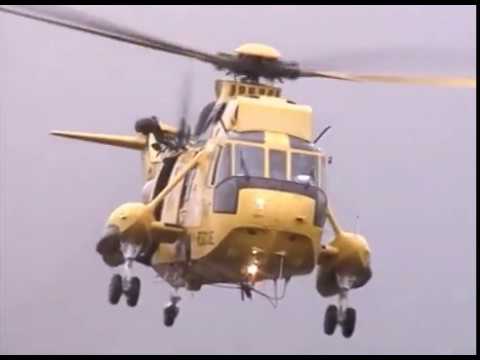
The Westland Sea King Helicopter is a symbol of versatility and resilience in the realm of military aviation. Initially developed by the British company Westland Helicopters, this aircraft has seen extensive service in various roles, from search and rescue to anti-submarine warfare.
Design and Performance
At the heart of the Sea Kings design is a focus on flexibility and adaptability. It features a twin-engine design for increased reliability and performance, and a large, spacious cabin that can be rapidly reconfigured to suit different mission requirements. The helicopters robust airframe and powerful engines enable it to operate in challenging weather conditions, making it an ideal choice for search and rescue operations.
Versatility in Action
The Westland Sea King Helicopter has served in a variety of roles and environments. Its primary role is in anti-submarine warfare, where its dipping sonar and array of torpedoes and depth charges make it a formidable adversary for enemy submarines. However, the Sea Kings adaptable design allows it to serve in other capacities, including transport, airborne early warning, and search and rescue. This adaptability has led to its use by military forces around the world, from the Royal Navy to the Indian Air Force.
Legacy and Impact
Even as newer models and designs emerge, the Westland Sea King Helicopter continues to hold a significant place in military aviation. Its enduring popularity is a testament to its reliable performance, versatile design, and the crucial role it has played in numerous military operations. Today, the Sea King continues to serve as a vital tool for nations worldwide, cementing its place in aviation history.
Key Features of the Westland Sea King
The Westland Sea King is a remarkable piece of British aviation technology that boasts several unique and outstanding features. As a medium-lift helicopter developed by Westland Helicopters, it has established a solid reputation for its durability, reliability, and versatility in various military and civilian roles.
One of the most distinctive features of the Westland Sea King is its twin-engine design. This design enables the helicopter to maintain flight even if one engine fails, ensuring a higher level of safety during operations. The helicopter also possesses an amphibious hull, allowing it to land on water. Its five-bladed main rotor and tail rotor system, coupled with powerful Rolls-Royce Gnome engines, provide the Sea King with excellent lift and manoeuvrability.
Advanced Avionics and Radar Systems
Another significant feature of the Westland Sea King is its advanced avionics and radar systems. It comes equipped with a state-of-the-art navigation suite, which includes an automatic flight control system, Doppler navigation radar, and weather radar. These systems enable the Sea King to operate efficiently in diverse weather conditions and challenging environments.
The Westland Sea King also features a spacious and versatile cabin, which can be configured to suit various mission requirements. Whether its for search and rescue missions, anti-submarine warfare, or troop transport, the Sea Kings cabin can be tailored to meet specific operational needs. Moreover, the helicopters rear-loading ramp and side door provide easy access for loading and unloading personnel and equipment.
Unfolding the History of the Westland Sea King
The Westland Sea King, a British version of the American Sikorsky S-61 helicopter, has a rich and storied history. Its production commenced in the early 1960s when the United Kingdom purchased the license to manufacture the Sikorsky S-61. The first Westland Sea King prototype took flight on May 27, 1969, marking a pivotal moment in British aviation history. Over the years, the Westland Sea King has undergone numerous modifications and upgrades to enhance its performance and capabilities.
Operational Roles and Deployments
The Westland Sea King played an integral role in several military and civilian operations. Its initial role was as an anti-submarine warfare helicopter for the Royal Navy. However, its versatility and robustness led to its deployment in various other capacities such as search and rescue, airborne early warning and control, and casualty evacuation. The Sea Kings performance during the Falklands War in 1982 is particularly noteworthy, where it was instrumental in anti-submarine and anti-ship warfare, troop transport, and medevac missions.
Variants of the Westland Sea King
Throughout its service, several variants of the Westland Sea King were developed. These include the Sea King HAS1, the original anti-submarine model, the Sea King HAR3, a dedicated search and rescue variant, and the Sea King AEW2, a variant equipped with airborne early warning systems. Each variant was tailored to fulfill specific operational requirements, demonstrating the flexibility and adaptability of the Westland Sea King design.
Despite its official retirement from the Royal Navy in 2016, the Westland Sea King remains a symbol of British aviation prowess. Its rich history and diverse operational roles underscore its significance in the annals of aviation history.
The Role of the Westland Sea King in Modern Aviation
The Westland Sea King has been a pivotal figure in modern aviation since its introduction in the 1960s. This British license-built version of the American Sikorsky S-61 helicopter was designed primarily for anti-submarine warfare but has since been adapted for a myriad of other functions. Its roles have expanded to include search and rescue (SAR), air-sea rescue (ASR), and airborne early warning (AEW) operations.
Versatility and Endurance
The Sea Kings versatility and endurance have made it a valuable asset in a variety of scenarios. Its design allows for both land and sea operations, making it particularly useful in maritime environments. The helicopters powerful engines and unique rotor design enable it to perform well in adverse weather conditions, enhancing its role in search and rescue missions. The Westland Sea King has saved countless lives in its SAR role, operating in both civilian and military capacities.
Technological Advancements
Over the years, the Westland Sea King has seen a number of technological advancements that have further cemented its place in modern aviation. These upgrades include improved radar systems, enhanced navigational aids, and modern communication systems. This constant evolution has allowed the Sea King to maintain operational relevance, even in the face of newer helicopter designs.
Legacy and Continued Use
Despite being in service for over half a century, the Westland Sea King continues to play a vital role in aviation. While many nations have retired their Sea King fleets, several still operate them in various capacities. The helicopters legacy is evident in its continued use and the respect it commands within aviation circles. The Westland Sea King truly embodies the adaptability and resilience that characterizes modern aviation.
Comparing the Westland Sea King with Other Military Helicopters
The Westland Sea King, a British adaptation of the American Sikorsky S-61 helicopter, is renowned for its versatility and durability, having served in a variety of roles such as search and rescue, anti-submarine warfare, and troop transport. This twin-engined helicopter has been in operation for over five decades, demonstrating its reliability and operational longevity.
Westland Sea King vs. Sikorsky UH-60 Black Hawk
When compared to the Sikorsky UH-60 Black Hawk, another popular military helicopter, the Westland Sea King stands out in terms of its amphibious capabilities. Its ability to land and take off from water is a feature not commonly found in many other military helicopters. The Black Hawk, on the other hand, is known for its speed and agility, being able to reach higher speeds and demonstrating more maneuverability than the Sea King.
Westland Sea King vs. Boeing CH-47 Chinook
The Boeing CH-47 Chinook is another helicopter that serves as a point of comparison. The Chinook, known for its tandem rotor configuration, has a higher load capacity than the Sea King. However, the Sea King, with its compact design and excellent hover performance, is better suited for operations in confined areas and adverse weather conditions.
Westland Sea King vs. Bell UH-1 Iroquois (Huey)
Comparing the Sea King to the Bell UH-1 Iroquois (Huey), its evident that the Sea King offers better all-weather operational capabilities. The Huey, while famous for its role in the Vietnam War, lacks the Sea Kings ability to operate effectively in poor weather conditions. Additionally, the Sea Kings anti-submarine warfare capabilities set it apart from the Huey, which was primarily used for transport and medevac operations.
In essence, while each military helicopter has its unique strengths, the Westland Sea Kings versatility, amphibious capabilities, and all-weather operational abilities distinguish it from many other military helicopters.