

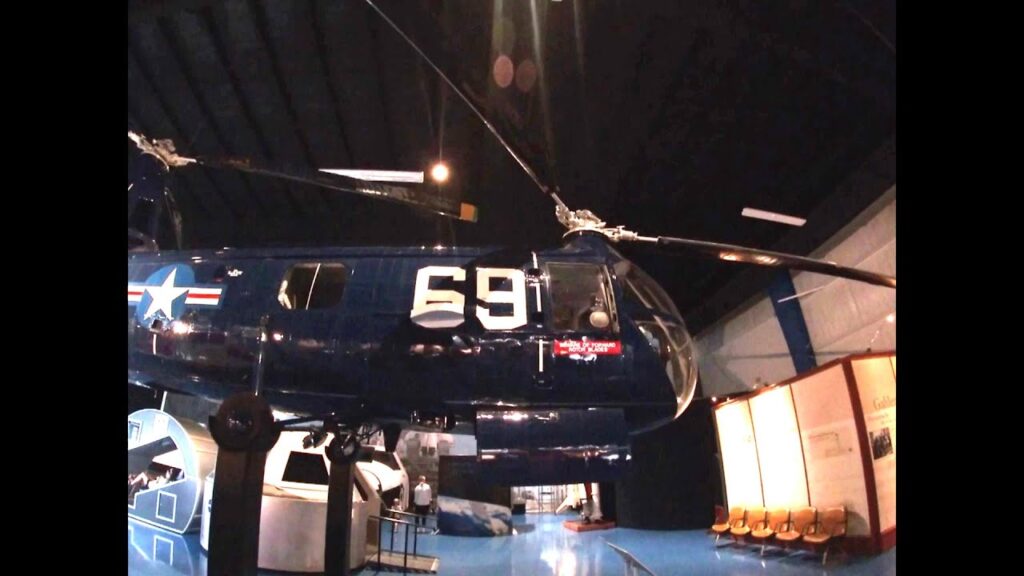
Exploring the History of the Piasecki HUP Retriever
The Piasecki HUP Retriever is an iconic piece of aviation history that was initially designed and produced by the Piasecki Helicopter Corporation. This remarkable aircraft first took to the skies in the late 1940s, a period that marked the beginning of the helicopters significance in military operations. The HUP Retriever was developed as a compact, utility helicopter primarily for the US Navy and the Royal Canadian Navy, demonstrating Piaseckis commitment to providing innovative solutions for the military sector.
Design and Development of the HUP Retriever
The design process of the HUP Retriever commenced in 1946, following a requirement from the United States Navy for a compact, ship-based utility helicopter. The first prototype was flown in 1948, and the helicopter soon proved its worth with its unique tandem-rotor layout and impressive performance. The design featured a distinctive feature – a rescue hoist, making the Retriever one of the first rescue helicopters in the world.
Operational History of the Piasecki HUP Retriever
The Piasecki HUP Retriever played a vital role in various missions during its operational years. Its primary use was for plane-guard duty where it stood by during carrier aircraft operations ready to rescue downed pilots. The Retriever also served other utility roles such as transporting personnel and cargo, and performing general liaison duties. By the mid-1950s, the HUP Retriever was replaced by more advanced models, but its contribution to aviation history is undeniable.
The Piasecki HUP Retrievers innovative design and successful service record truly illustrate the significant advancements in helicopter technology during the mid-20th century. It stands as a testament to Piaseckis legacy in the world of aviation.
Key Features of the Piasecki HUP Retriever Helicopter
The Piasecki HUP Retriever is a unique helicopter that boasts a range of impressive features. First and foremost, the HUP Retriever is renowned for its tandem rotor design. This distinctive setup provides enhanced stability and lift capacity, allowing the helicopter to handle heavy payloads and perform complex maneuvers with ease. The tandem rotor design also eliminates the need for a tail rotor, making the helicopter safer and more efficient.
Powerful Engine and Impressive Speed
The HUP Retriever is powered by a Continental R-975-46A engine that delivers a maximum speed of up to 180 km/h. This powerful engine allows the helicopter to operate in various challenging conditions, including high-altitude and heavy-lift operations. The helicopters maximum range is approximately 480 km, making it suitable for both short and long-distance missions.
Advanced Navigation and Control Systems
Another notable feature of the HUP Retriever is its advanced navigation and control systems. The helicopter is equipped with state-of-the-art avionics, including a sophisticated autopilot system that allows for precise control and navigation. The HUP Retriever also features a rescue hoist, underscoring its role as a utility and rescue aircraft.
Spacious and Versatile Interior
The HUP Retriever offers a spacious and versatile interior. It can accommodate up to 3 crew members and 2 passengers, making it ideal for various types of missions, including personnel transport, cargo delivery, and medical evacuation. The helicopters interior can be easily reconfigured to suit different mission requirements, adding to its versatility and functionality.
Operational Use and Performance of the Piasecki HUP Retriever
The Piasecki HUP Retriever was a highly versatile helicopter, primarily used by the United States Navy and the United States Army during the mid-20th century. This dual-rotor helicopter was noted for its exceptional performance in various operational scenarios, including search and rescue missions, personnel transport, and cargo delivery. The HUP Retrievers unique design provided the necessary stability and power, enabling it to perform under challenging conditions and in a variety of roles.
Search and Rescue Operations
The HUP Retriever was renowned for its effectiveness in search and rescue operations. Its compact size and twin rotor design allowed it to maneuver in tight spaces, making it ideal for rescue missions in difficult terrains. Additionally, the Retriever was equipped with a rescue hoist, which could lift stranded individuals or drop supplies as needed.
Personnel Transport and Cargo Delivery
The Piasecki HUP Retriever was also frequently used for personnel transport and cargo delivery. It could carry up to 10 passengers or an equivalent amount of cargo, showcasing its versatility. Despite its relatively small size, the Retriever had a powerful engine that allowed it to maintain stable flight even when fully loaded.
The HUP Retrievers performance was further enhanced by its range and speed. It could reach speeds up to 100 mph and had a range of approximately 330 miles, making it a reliable choice for longer missions. Despite its retirement from active service, the Piasecki HUP Retriever remains a testament to the innovation and excellence of mid-century helicopter design.
The Role of the Piasecki HUP Retriever in Military Aviation
The Piasecki HUP Retriever played a significant role in shaping the course of military aviation. Its development began in the late 1940s, when the US Navy expressed the need for a compact, multi-purpose helicopter. The HUP Retriever was a direct response to this need, designed and manufactured by Piasecki Helicopter Corporation, now known as Vertol Aircraft Corporation. Its primary function was to serve as a utility and rescue aircraft for the US Navy and Marine Corps.
Design and Capabilities
The design of the Piasecki HUP Retriever was unique for its time, featuring a tandem rotor layout that allowed for increased lift and stability. This design, combined with its compact size, made the HUP Retriever ideal for operations on aircraft carriers, where space was often limited. The helicopter was equipped with a rescue hoist, which could be used to lift injured personnel from hard-to-reach areas. Its capabilities were further enhanced by the addition of a sonar system, enabling it to participate in anti-submarine warfare.
Service in the Military
In terms of its service in the military, the Piasecki HUP Retriever was used extensively throughout the 1950s and early 1960s. It served in various capacities, including search and rescue, personnel transport, and medevac operations. The HUP Retriever also saw action during the Korean War, where it was used for medical evacuation missions, proving its worth in combat situations. Despite being replaced by more modern helicopters in the mid-1960s, the HUP Retriever left a lasting legacy in military aviation, demonstrating the value of versatile, multi-purpose helicopters in various military operations.
Comparing the Piasecki HUP Retriever to Other Helicopters of Its Era
The Piasecki HUP Retriever was a pioneering force in the world of aviation during the mid-20th century. As one of the earliest models of tandem rotor helicopters, it significantly influenced the development of rotorcraft. When compared to other helicopters of its era, the HUP Retriever stands out in several key aspects.
Performance and Utility
The HUP Retriever was renowned for its superior performance and utility. Unlike many of its contemporaries, such as the Bell 47 and Sikorsky R-4, the HUP Retriever featured a unique tandem rotor design. This configuration provided a significant boost to its lifting capability, enabling it to carry heavier payloads. Additionally, it eliminated the need for a tail rotor, freeing up more power for the main rotors and enhancing the helicopters overall performance.
Design and Innovation
In terms of design and innovation, the HUP Retriever was a step ahead of other helicopters of its era. Its unique design, featuring two large main rotors mounted one behind the other, was a stark departure from the conventional single rotor and tail rotor design seen in helicopters like the Bell 47. This innovation allowed the HUP Retriever to excel in both hover and forward flight performance.
Durability and Longevity
When it comes to durability and longevity, the HUP Retriever was unparalleled. Many helicopters of its time, such as the Sikorsky R-5, had shorter operational lifespans due to their less robust construction. However, the HUP Retriever, with its sturdy build and rigorous maintenance schedules, proved to be a reliable workhorse, with many units serving for over a decade in active service.