
A Comprehensive Overview of Hughes TH-55 Osage
The Hughes TH-55 Osage is an American light-duty helicopter that has made a significant impact in both military and civilian aviation. Manufactured by Hughes Helicopters, this iconic aircraft was introduced in the 1960s and has since been an integral part of various military training programs, especially for the United States Army.
Design and Specifications
The Hughes TH-55 Osage is known for its simplistic yet robust design. This two-seater aircraft is powered by a single Lycoming O-320-A2B piston engine that can deliver up to 140 horsepower. With a maximum speed of 138 km/h and a range of approximately 383 kilometers, the TH-55 has proven to be a reliable and versatile machine. The helicopters compact size, with a rotor diameter of 8.18 meters and a length of 7.06 meters, allows for maneuverability and ease of control, making it an ideal training aircraft.
Role in Military Training
The Hughes TH-55 Osages primary role has been in the field of military training. The U.S Army utilized this aircraft extensively in their primary helicopter training programs from the 1960s to the 1980s. More than 60,000 Army aviators have been trained on the TH-55, earning it the nickname “The Mattel Messerschmitt” for its durability and widespread use.
Legacy and Influence
The influence of the Hughes TH-55 Osage extends beyond its military service. The design and engineering principles of the TH-55 have been adopted in numerous other aircraft models. Despite being replaced by newer models in military service, the TH-55 continues to be a popular choice in civilian aviation, especially for training and recreational flying.
Key Features and Specifications of Hughes TH-55 Osage
The Hughes TH-55 Osage is an iconic aircraft with a rich history and a series of standout features and specifications. This lightweight, two-seater helicopter was primarily designed for training purposes, with thousands of pilots having honed their skills in the cockpit of a TH-55.
Engine and Performance
At the heart of the Hughes TH-55 Osage is a powerful Lycoming O-320-A2B engine. This piston engine, which boasts 140 horsepower, enables the aircraft to achieve a top speed of 76 knots and a service ceiling of 13,300 feet. The Osage has an impressive range of 267 nautical miles, making it suitable for extended training missions.
Design and Functionality
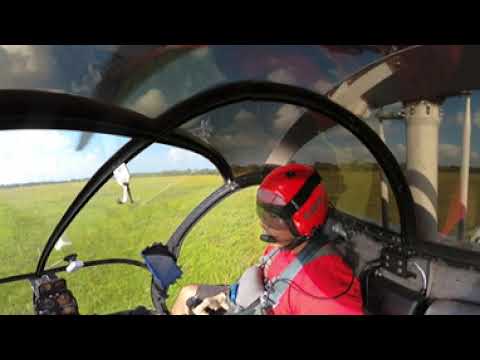
The TH-55 Osages design is optimized for pilot training. The helicopter features a fully glazed canopy, providing excellent visibility from both the front and rear seats. This is a critical feature for pilot training, as it allows for unobstructed views of the surroundings and the control panel. The aircrafts compact dimensions, with a rotor diameter of 8.18 meters and a length of 9.40 meters, make it highly maneuverable.
Safety and Reliability
The Hughes TH-55 Osage has a strong reputation for safety and reliability. Its robust construction and straightforward design minimize the risk of mechanical failures. Furthermore, the helicopters nimble handling and responsive controls contribute to its overall safety profile, making it an excellent choice for training new pilots.
These key features and specifications of the Hughes TH-55 Osage showcase its prowess as a reliable and efficient training helicopter. Its combination of power, maneuverability, and safety make it a standout choice in its category.
Exploring the History and Development of Hughes TH-55 Osage
The Hughes TH-55 Osage is a historical gem in the realm of aviation, tracing its roots back to the 1960s. Designed and manufactured by the renowned Hughes Helicopters, the TH-55 Osage was primarily developed to serve as a training helicopter for the United States Army. This light utility helicopter, also known as the Hughes 269, was first introduced in 1956, heralding a new era in helicopter training.
The development of the Hughes TH-55 Osage is a testament to the innovative spirit of Hughes Helicopters. The initial model, the Hughes 269, was a two-seater light helicopter. It underwent extensive testing and improvement, and in 1964, it was adopted by the U.S Army as the TH-55A for basic helicopter training. Its excellent performance, low maintenance, and cost-effectiveness made it an ideal choice for training purposes.
The Hughes TH-55 Osage had a significant impact on the U.S Armys helicopter training program. By the time production ended in 1983, over 1,000 units of the TH-55A had been produced, making it one of the most prolific training helicopters in the history of the U.S Army. Even after its retirement from the U.S Army in 1988, the Hughes TH-55 Osage continued to be a popular choice among civilian flight schools and private owners due to its reliability and easy handling.
Key Features and Performance of Hughes TH-55 Osage
The Hughes TH-55 Osage was designed with a focus on simplicity and ease of use. It featured a three-bladed main rotor, a two-bladed tail rotor, and a piston engine. With a maximum speed of 96 mph and a range of 214 miles, the TH-55A provided the perfect platform for novice pilots to learn the basics of helicopter flying. Its superior handling characteristics and safety features further enhanced its suitability for training purposes.
The Role of Hughes TH-55 Osage in Military Training
The Hughes TH-55 Osage has been an integral part of military training, serving as the primary helicopter trainer for the United States Army for more than two decades. The Hughes TH-55 Osage, a light observation helicopter, was introduced into service in 1964, replacing the Hiller H-23 Raven. The helicopter was named “Osage” in honor of the Osage Nation and was used extensively in flight training due to its maneuverability and reliability.
Key Features of the Hughes TH-55 Osage
The Hughes TH-55 Osage was designed with a focus on simplicity and efficiency, making it an ideal training helicopter. The aircraft features a two-bladed main rotor and a two-bladed tail rotor. The TH-55 is powered by a single Lycoming O-360-A2D engine, providing up to 180 horsepower. The helicopters light weight and simple design made it an excellent platform for teaching basic helicopter flight mechanics.
Impact on Military Training
The Hughes TH-55 Osage played a crucial role in training military pilots, particularly during the Vietnam War. The helicopters light weight and small size made it ideal for teaching student pilots the fundamentals of helicopter flight, including takeoff, landing, hover, and navigation. Over its service life, the TH-55 trained thousands of military pilots, many of whom went on to fly larger and more complex helicopters in combat situations. The TH-55s role in military training cannot be overstated, as it provided the foundation for countless military pilots careers.
Though the Hughes TH-55 Osage was retired from service in the U.S. Army in 1988, its legacy continues. It was replaced by the Bell 206, but the Osage remains a significant part of U.S. military aviation history. The helicopters impact on pilot training has been significant and lasting, highlighting the essential role of reliable, manageable aircraft in preparing pilots for military service.
Comparing Hughes TH-55 Osage with Other Training Helicopters
The Hughes TH-55 Osage has been a mainstay in military aviation training for many years, with its easy handling and robust build making it a favorite among trainee pilots. However, when compared to other training helicopters, there are a few key differences that set the TH-55 Osage apart.
Handling and Performance
One of the major differences between the Hughes TH-55 Osage and other training helicopters lies in its handling and performance. The TH-55 is known for its excellent stability and easy maneuverability, making it an ideal choice for trainees who are just starting their journey into helicopter aviation. This contrasts with other training helicopters, such as the Robinson R22, which, while also being a popular training model, is often noted for its more challenging handling characteristics.
Design and Features
The design and features of the Hughes TH-55 Osage also stand out when compared to other training helicopters. The TH-55 has a simple, straightforward design that is easy for trainees to understand and operate. It also boasts features such as a fully-articulated rotor system and a jet engine, which are not commonly found in other training helicopters. For instance, the Schweizer 300C, another popular training helicopter, utilizes a piston engine and a semi-rigid rotor system.
Longevity and Durability
Lastly, the longevity and durability of the Hughes TH-55 Osage make it a standout choice among other training helicopters. The TH-55 has a proven track record of reliable performance, with many models still in operation today despite being decades old. This durability is not always found in other training helicopters, such as the Guimbal Cabri G2, which, while offering modern features and technologies, does not have the same long history of proven performance.