
Unraveling the History of the Aérospatiale SA 341 Gazelle
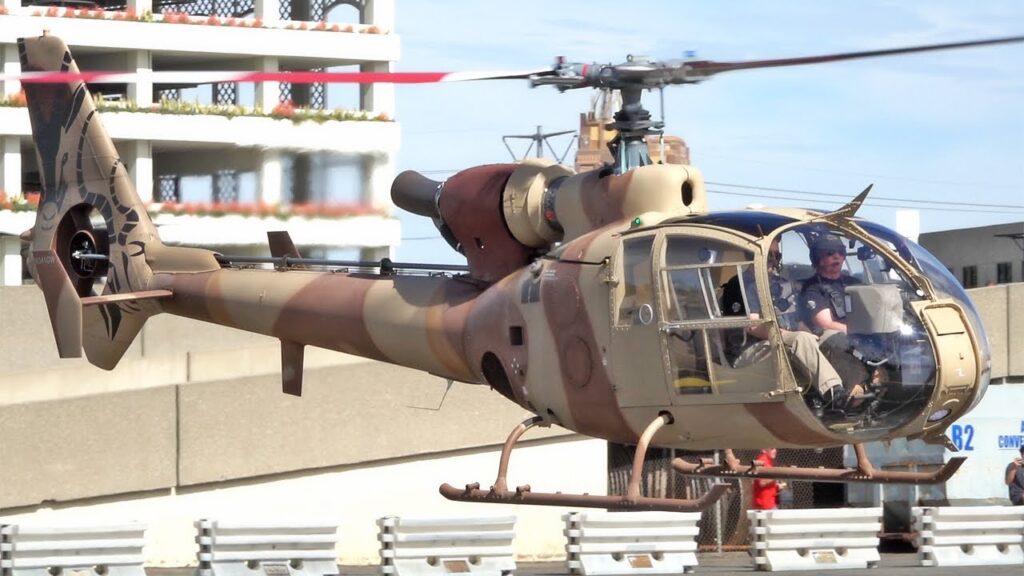
The Aérospatiale SA 341 Gazelle is a multi-purpose helicopter, developed by French manufacturer Aérospatiale, now part of the Airbus Helicopters. Its inception dates back to the early 1960s, with the first flight taking place on April 7, 1967. The Gazelle was a product of a Franco-British joint venture, which aimed at creating a light utility helicopter that could perform a variety of roles, from observation, photography, air-sea rescue, to anti-tank warfare.
Despite its compact size, the SA 341 Gazelle was known for its speed and agility. In fact, in 1973, it set a world speed record for helicopters, reaching 212.8 mph (342.3 km/h). This record-breaking performance was largely attributed to its innovative design, particularly its Fenestron tail rotor. This was the first time a Fenestron tail rotor was used in a production helicopter, providing better flight control and reducing noise and vulnerability in combat.
The Gazelle was not just a pioneer in design but also in its production process. It was one of the first helicopters to be produced using a modular approach. This meant that the helicopter could be easily adapted for different roles, simply by changing its equipment packages. This adaptability, combined with its performance capabilities, led to its extensive use in both military and civilian roles worldwide.
In the military sector, the Gazelle has been used by the armed forces of more than 34 countries, including the UK, France, Egypt, and Iraq. On the civilian front, it has found use in police forces, emergency services, and private companies. Despite being in service for over 50 years, the Aérospatiale SA 341 Gazelle remains in operation today, testament to its enduring design and adaptability.
Technical Specifications and Features of Aérospatiale SA 341 Gazelle
The Aérospatiale SA 341 Gazelle is a multi-purpose helicopter, renowned for its speed, agility, and lightweight construction. This French-made aircraft was first introduced in 1968, marking a significant advancement in helicopter technology. The Gazelle is powered by a single Turbomeca Astazou IIIA or IIIA2 turboshaft engine that generates 592 horsepower, propelling it to a maximum speed of 310 km/h (193 mph). With a service ceiling of 5,000 meters (16,404 feet), the Gazelle showcases impressive high-altitude performance.
One of the distinguishing features of the SA 341 Gazelle is its revolutionary Fenestron tail rotor. This enclosed tail rotor significantly reduces noise and enhances safety by protecting the tail rotor from ground impacts. The Gazelles airframe is composed of light alloy, giving it a light empty weight of approximately 1,080 kg. Despite its lightweight construction, the Gazelle can carry a useful load of up to 1,041 kg, demonstrating its robust and efficient design.
Interior and Avionics
The Aérospatiale SA 341 Gazelle features a 5-seat configuration, including the pilot and co-pilot. The spacious interior allows for various configurations to accommodate passengers or cargo. For medical evacuation missions, the Gazelle can be equipped to carry two stretchers and one medical attendant. In terms of avionics, the Gazelle is outfitted with a modern suite that includes a GPS system, a VHF/UHF communication system, and a transponder. This array of equipment ensures reliable and efficient navigation and communication during flight operations.
Operational Use and Capabilities
The Gazelles versatility has seen it used in a variety of roles, including light transport, scout, and light attack duties. Its impressive speed and agility make it an effective platform for observation and target acquisition. Furthermore, the Gazelle can be armed with anti-tank missiles and machine guns, providing it with considerable firepower for its size. With its superior technical specifications and diverse capabilities, the Aérospatiale SA 341 Gazelle remains a highly regarded aircraft in both civilian and military aviation.
Notable Missions Undertaken by the Aérospatiale SA 341 Gazelle
The Aérospatiale SA 341 Gazelle is a lightweight, five-seat utility helicopter, known for its speed, agility, and the various missions it has been used for since its inception. One of the most notable missions undertaken by the Aérospatiale SA 341 Gazelle was during the Falklands War in 1982. The British Army used the Gazelle extensively for casualty evacuation, transport, and reconnaissance missions. It played a crucial role in the conflict, showcasing its durability and adaptability in hostile environments.
Falklands War
During the Falklands War, the Gazelle helicopters were tasked with a multitude of responsibilities. They proved instrumental in reconnaissance missions, providing vital information to ground forces. Their small size and speed allowed them to navigate the islands effectively, often under challenging weather conditions. They also served as casualty evacuation vehicles, transporting wounded soldiers to medical facilities, often under heavy fire.
Operation Desert Storm
Another significant mission involving the Aérospatiale SA 341 Gazelle was during Operation Desert Storm in 1991. The Gazelle was utilized by the French Army for its anti-tank capabilities. Equipped with HOT anti-tank missiles, the Gazelles played a pivotal role in the ground offensive against Iraqi forces. They were also used for reconnaissance missions, providing crucial battlefield intelligence.
Apart from these, the Aérospatiale SA 341 Gazelle has been involved in various peacekeeping missions and humanitarian aid operations worldwide, displaying its versatility and reliability in diverse operational scenarios.
Comparing the Aérospatiale SA 341 Gazelle with Other Helicopters
The Aérospatiale SA 341 Gazelle is a highly versatile and resilient helicopter that stands out among its peers in several key areas. Known for its high performance, this helicopter is commonly compared to other models such as the Bell 206, Eurocopter AS350, and the MD 500 series.
Performance and Versatility
When compared to the Bell 206, the Gazelle outperforms it in terms of speed and range. The Gazelles top speed of 310 km/h and range of 670 km significantly surpass the Bell 206s top speed of 217 km/h and range of 611 km. Similarly, the Gazelles exceptional versatility makes it a preferred choice for military, civil, and utility operations worldwide.
Engine Power and Capacity
In terms of engine power, the Aérospatiale SA 341 Gazelle is equipped with a single Turbomeca Astazou turbine engine, providing it with a power output that rivals that of the Eurocopter AS350. This gives the Gazelle an edge in high-altitude and hot-weather operations. Additionally, the Gazelles capacity to carry five passengers comfortably while also offering a generous cargo space puts it in a favorable position when compared to the MD 500 series, which typically accommodates only four passengers.
Safety and Maintenance
Safety-wise, the Gazelles robust design and proven reliability give it a competitive edge over many other helicopter models. Its known for its crashworthy fuel system and excellent autorotation characteristics, which significantly enhance its safety profile. On the maintenance front, the Gazelles simple design and widespread availability of parts make it easier and more cost-effective to maintain than many of its contemporaries. This has led to the Gazelle being a popular choice among operators who prioritize safety and cost-effectiveness.
How the Aérospatiale SA 341 Gazelle Shaped Modern Aviation
The Aérospatiale SA 341 Gazelle is more than just a helicopter. It is a symbol of the evolution of modern aviation. Unveiled in 1967, this French-built light utility helicopter has played a significant role in transforming the aviation industry. The Gazelles innovative design and advanced features set new standards in the sector, influencing the development of subsequent helicopter models.
Breaking New Ground with Technology
The Aérospatiale SA 341 Gazelle was the first helicopter to feature a fenestron tail rotor — a design that has since become a staple in many modern helicopters. This design not only improved the helicopters flight performance but also significantly increased its safety by protecting the tail rotor. Additionally, the Gazelle introduced the use of composite materials in its construction, a trend that has since become commonplace in aircraft manufacturing. This resulted in a lighter and more fuel-efficient aircraft, paving the way for the development of more eco-friendly aviation technologies.
Enhancing Versatility and Functionality
The Gazelles versatility also had a profound impact on modern aviation. The helicopter was designed to be easily adaptable for a range of uses, from military operations to civilian services such as emergency medical services and transportation. This multi-functionality has become a key feature in modern aviation design. Moreover, the Gazelles advanced avionics system was ahead of its time, introducing technologies such as autopilot and glass cockpit features that have become standard in todays aircraft.
Influencing Future Designs
The Aérospatiale SA 341 Gazelles influence extends beyond its technical specifications. Its sleek, streamlined design set a new aesthetic standard for helicopters, influencing the look of future models. The Gazelles design ethos — combining functionality with aesthetics — is now a guiding principle in modern aviation design.