
The Historical Significance of Focke-Achgelis Fa 223 Drache
The Focke-Achgelis Fa 223 Drache (Dragon in English), an impressive helicopter developed during the Second World War by Germany, holds a significant place in aviation history. This innovative aircraft, designed by Heinrich Focke, marked a substantial leap in helicopter technology. Its unique dual-rotor design, powerful engine, and remarkable lifting capacity set the foundation for future helicopter development.
The Fa 223 Drache was the first helicopter to be produced in series, with a total of 20 units manufactured. Despite the limited number, its impact was tremendous. The helicopter demonstrated unmatched capabilities in transportation, rescue missions, and reconnaissance, proving the potential of helicopters in military operations. It was the first helicopter to cross the English Channel, an event that demonstrated the machines range and reliability, further solidifying its historical significance.
Technical Advancements and Capabilities
The Fa 223 Drache was equipped with a 1,000-horsepower Bramo 323 radial engine, allowing it to reach speeds of up to 175 km/h and attain a service ceiling of 7,000 meters. Its innovative design featured a steel tube fuselage and twin intermeshing rotors, eliminating the need for a tail rotor. This setup enabled the Drache to lift heavier loads, up to 1,000 kilograms, a feat unparalleled at the time.
Despite its significant contribution to aviation history, the Focke-Achgelis Fa 223 Drache remains relatively unknown to the general public. Its story, however, serves as a testament to the rapid advancements in technology during wartime and its role in shaping the future of aviation.
Technical Specifications and Performance of Focke-Achgelis Fa 223 Drache
The Focke-Achgelis Fa 223 Drache was a remarkable piece of aviation history, boasting impressive technical specifications and performance metrics for its time. Manufactured by Focke-Achgelis, a German company, during the Second World War, the Fa 223 Drache was a helicopter, a rarity in that era. The helicopter was powered by a single 1000 hp Bramo 323 radial engine, giving it significant power and endurance.
Design and Dimensions
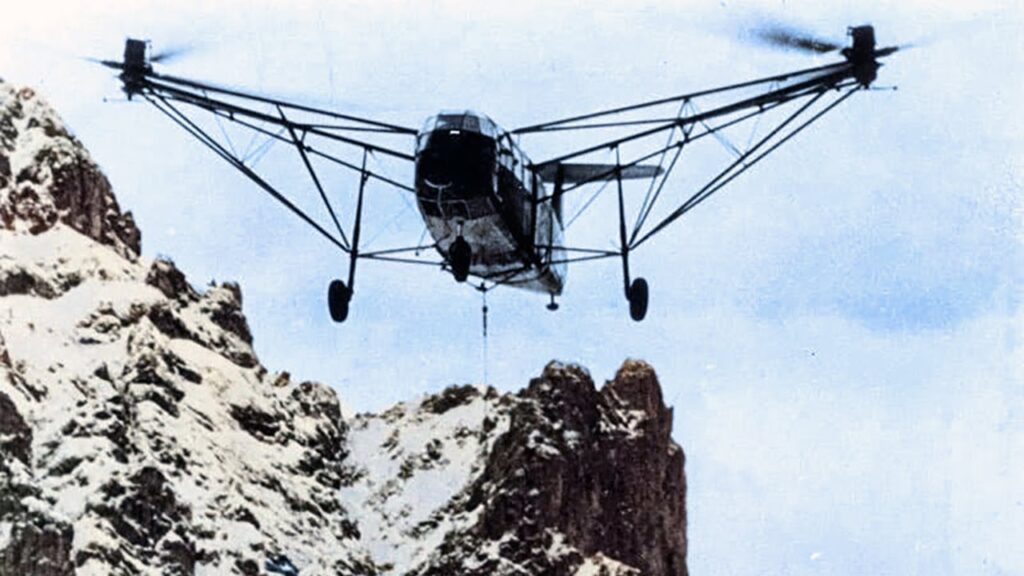
The design of the Fa 223 Drache was unique. It had a twin-rotor design, with each rotor having three blades. The rotors were mounted on outriggers on either side of the fuselage, a feature that gave the aircraft a distinct appearance. The helicopter was large for its time, with a length of 12.2 meters, a height of 4.35 meters, and a rotor diameter of 12 meters. The aircraft also had a maximum takeoff weight of 3,500 kilograms, making it one of the heaviest helicopters of the time.
Performance
In terms of performance, the Focke-Achgelis Fa 223 Drache had a top speed of 175 kilometers per hour and a cruising speed of 121 kilometers per hour. It had a range of 700 kilometers and a service ceiling of 7,000 meters, which was quite impressive for a helicopter of its time. The Fa 223 could also climb at a rate of 3.4 meters per second, enabling it to reach its service ceiling in a relatively short amount of time.
Operational Role and Capabilities
The Fa 223 was designed for a range of roles, including transport, reconnaissance, and search and rescue operations. It had a payload capacity of 1,000 kilograms, allowing it to carry a significant amount of cargo or a number of passengers. Furthermore, the helicopters impressive range and service ceiling made it ideal for long-range missions and high-altitude operations. Despite its notable performance and capabilities, only 20 Fa 223 Draches were built due to the challenges of wartime production.
How the Focke-Achgelis Fa 223 Drache Revolutionized Aviation
The Focke-Achgelis Fa 223 Drache, a German helicopter produced during the Second World War, introduced a number of revolutionary advancements in aviation technology. As the first helicopter to be manufactured on a production line, the Fa 223 set a precedent for future aviation manufacturing processes. Its design and features, including a dual rotor system and a central cargo bay, established it as a significant contributor to the evolution of aviation technology.
The Dual Rotor System
The most significant contribution of the Fa 223 to aviation was its unique dual rotor system. Unlike other helicopters of its time, which primarily relied on a single main rotor for lift and a smaller tail rotor for stability, the Fa 223 featured two large, side-by-side rotors. This innovative design allowed for increased stability and load-bearing capacity, making the Fa 223 a pioneer in heavy-lift aviation.
Central Cargo Bay
Another groundbreaking feature of the Fa 223 was its central cargo bay. This was a novel concept at the time, as most helicopters were designed to carry passengers or cargo externally. The central cargo bay of the Fa 223, however, allowed for the secure and protected transport of goods, paving the way for the development of future cargo and transport helicopters.
Furthermore, the Fa 223s capability to perform vertical take-offs and landings, coupled with its high-altitude performance, made it a versatile and efficient machine. These features not only revolutionized the concept of aviation during the war, but also laid the groundwork for the development of modern helicopters.
Focke-Achgelis Fa 223 Drache: Its Role in World War II
The Focke-Achgelis Fa 223 Drache was a significant game-changer in World War II, showcasing the potential of helicopter technology in warfare. Manufactured by the German company Focke-Achgelis, it was the first helicopter to be produced in series and used operationally. This versatile machine was utilized in various roles such as transport, reconnaissance, and casualty evacuation, proving its worth on numerous fronts.
Transport and Reconnaissance
One of the primary roles of the Focke-Achgelis Fa 223 Drache during World War II was transportation. With its powerful 1000hp Bramo Fafnir radial engine, it was capable of carrying a payload of up to 1000kg. This made it ideal for transporting supplies, equipment, and personnel in difficult terrain and adverse weather conditions where conventional aircraft and ground vehicles struggled. Additionally, the helicopters ability to hover and perform vertical take-offs and landings was particularly beneficial in reconnaissance missions. It allowed for precise positioning and the ability to stay in one location for an extended period, which was vital for detailed observation and reporting.
Casualty Evacuation
Perhaps one of the most crucial roles the Focke-Achgelis Fa 223 Drache played during World War II was in casualty evacuation. Its spacious interior allowed for the transportation of wounded soldiers directly from the battlefield to medical facilities. This quick and efficient evacuation method significantly increased the survival chances of the injured, proving the helicopters immense value in combat situations. The Fa 223 Draches contribution in this area marked a turning point in military medicine, laying the foundation for modern air ambulance services.
Exploring the Legacy of Focke-Achgelis Fa 223 Drache in Modern Helicopters
The Focke-Achgelis Fa 223 Drache, a helicopter designed and manufactured during World War II, has significantly impacted the evolution of modern helicopters. As the first helicopter to achieve serial production, the Fa 223 Draches design and technological advancements have served as a blueprint for subsequent developments in the helicopter industry.
The Focke-Achgelis Fa 223 Drache was renowned for its unique dual-rotor design, which provided increased stability and load-carrying capacity. This pioneering design has been incorporated into many modern helicopters, including the Chinook series. Additionally, the Draches ability to hover and perform vertical take-offs and landings has become a standard feature in todays helicopters.
Technological Advancements
The Fa 223 Drache was also equipped with innovative technology that has influenced current helicopter designs. For instance, it utilized a radial engine that provided exceptional power and reliability, a feature that is still valued in modern helicopters. Moreover, the Drache was fitted with a rescue winch, setting the stage for the future role of helicopters in search and rescue missions.
Operational Capabilities
Another significant legacy of the Fa 223 Drache lies in its operational capabilities. It was the first helicopter used for transport and rescue missions, setting the precedent for modern helicopters multi-purpose use. Today, helicopters are integral to various operations, from military missions to civilian uses such as air ambulance services, firefighting, and cargo transport, reflecting the versatile legacy of the Fa 223 Drache.